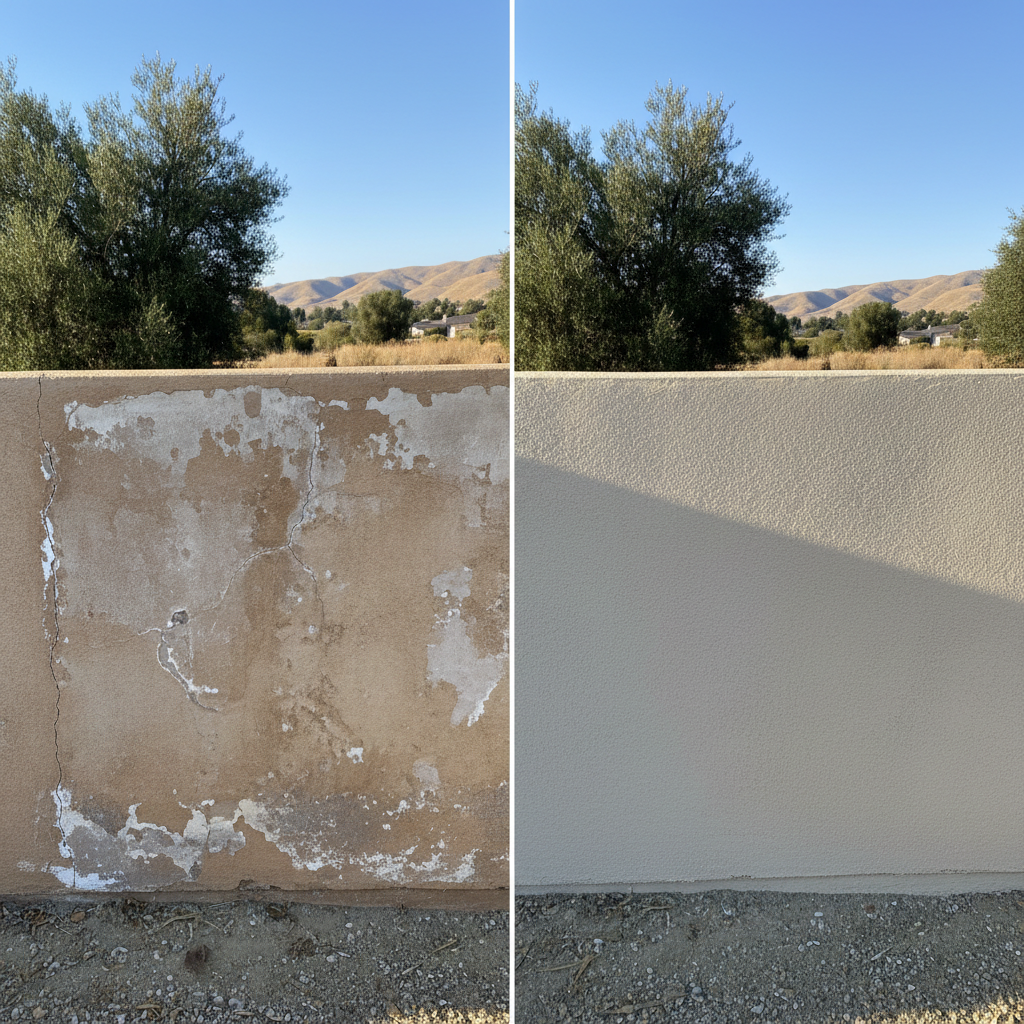
Alright, let's talk about replacing stucco. If you're looking at your house and seeing cracks, maybe some pieces flaking off, or it just looks plain old, you've probably started thinking about what you can do. Usually, it comes down to two main options: either we strip all that old stucco off and start fresh, or we go right over it with a new layer. So, which one makes sense for you?
I've been doing this for a long time, right here in Clovis, and I've seen both ways work out great—and, honestly, I've seen them go wrong. It really depends on your house, what you're willing to spend, and what you're actually trying to accomplish. Let's dive in.
Option 1: We Tear It All Off and Re-Stucco
This is pretty much exactly what it sounds like. We come in, and we take off every single bit of that old stucco until we're down to the sheathing. Sometimes, if there's water damage hiding underneath, even the sheathing has to go. Then, we put on a completely new stucco system. That usually means new paper, lath, a scratch coat, a brown coat, and finally, the finish coat. Think of it like giving your house a brand-new skin.
The Good Stuff (Pros):
- You start with a clean slate: This is, hands down, the biggest perk. We get to check the sheathing, the framing, and all the flashing around your windows and doors for any hidden moisture damage or rot. You'd be amazed what we uncover sometimes, especially on older homes in spots like the Peach and Nees area, where houses have really taken a beating from the sun and sprinklers over the years. Catching these problems early can save you from much bigger headaches and costs later on.
- It lasts longer, plain and simple: A new stucco system, put on correctly from the ground up, is going to hold up for a very long time. You're getting all the newest materials and methods, which means a tough, weather-tight exterior.
- Better energy efficiency: When we do a full tear-off, it gives us a chance to add or upgrade the insulation behind the stucco. That can make a real difference in your utility bills, especially during our scorching Clovis summers.
- A total new look: You're not stuck with the old stucco's texture or thickness. You can pick any finish you want—smooth, sand float, dash, whatever your heart desires.
The Not-So-Good Stuff (Cons):
- It costs more: No surprises here. More work, more materials, more fees for getting rid of the old stuff. It's a bigger investment upfront, for sure.
- It takes longer: Tearing off all that old material just eats up time. Your house will be a construction zone for a bit longer than with other methods.
- It's messier: Expect more dust, more noise, and more debris during that tear-off phase.
Option 2: Stucco Right Over the Old Stucco (Re-dashing/Resurfacing)
This method involves getting the existing stucco surface ready and then just putting a new layer of stucco right on top. People often call it re-dashing or resurfacing, though "true" re-dashing usually just means putting on a new finish coat. When we talk about stuccoing over, we're typically adding a new brown coat and finish coat, or sometimes just a new finish coat if the existing base is really solid.
The Good Stuff (Pros):
- Lower cost: Generally, this is easier on the wallet because you're not paying for demolition labor or disposal.
- Faster project completion: Without having to tear everything off, the job moves along a lot quicker.
- Less disruptive: Less mess, less noise, and your home isn't exposed to the elements for nearly as long.
- Adds another layer of protection: You're basically adding another shield to your home's exterior, which can give it a bit more resistance against the weather.
The Not-So-Good Stuff (Cons):
- Doesn't fix hidden problems: This is the biggest downside. If you've got hidden moisture damage, rot, or structural issues behind the old stucco, just putting new stucco over it won't solve anything. In fact, it could even trap moisture and make things much worse later on.
- Adds weight to your house: Stucco is heavy, and adding another full layer can put extra stress on your home's frame. Most houses can handle it, but it's definitely something to think about.
- Limited texture choices: You're often stuck with whatever texture the old stucco has. If the old stuff is really rough, getting a super smooth new finish can be pretty tough without piling on a ton of material.
- Could peel off later: If the old stucco isn't prepped perfectly or has spots where it's not sticking well, the new layer might not bond properly. It could peel off or crack sooner than you'd expect.
My Recommendation for Clovis Homeowners
Look, if your existing stucco is in pretty decent shape—maybe just a bit faded, a few tiny cracks, but no big water stains, no bulging, no soft spots—then stuccoing over it can be a perfectly good and affordable choice. It's a fantastic way to freshen up your home's look without emptying your bank account.
However, and this is a really big however: if you suspect any water is getting in, if you see significant cracking, bulging, or if your house is older and hasn't had its stucco touched in decades, a full tear-off is almost always the smarter move. Our climate here in the Central Valley, with its intense heat and occasional heavy rains, is hard on building materials. Water always finds a way, and if it's been getting behind your stucco, you absolutely need to fix that before you just cover it up.
The peace of mind you get from knowing what's behind your walls, having everything sealed up right, and ending up with a brand-new, tough stucco system is, for most homeowners, worth the extra money. You'll avoid expensive surprises down the road, believe me. We at Top Line Clovis Stucco always suggest a thorough inspection first, no matter which option you're leaning toward. We'll give you an honest assessment of your current stucco and help you pick the best decision for your home and your budget. Don't just guess; let's take a look together, okay?