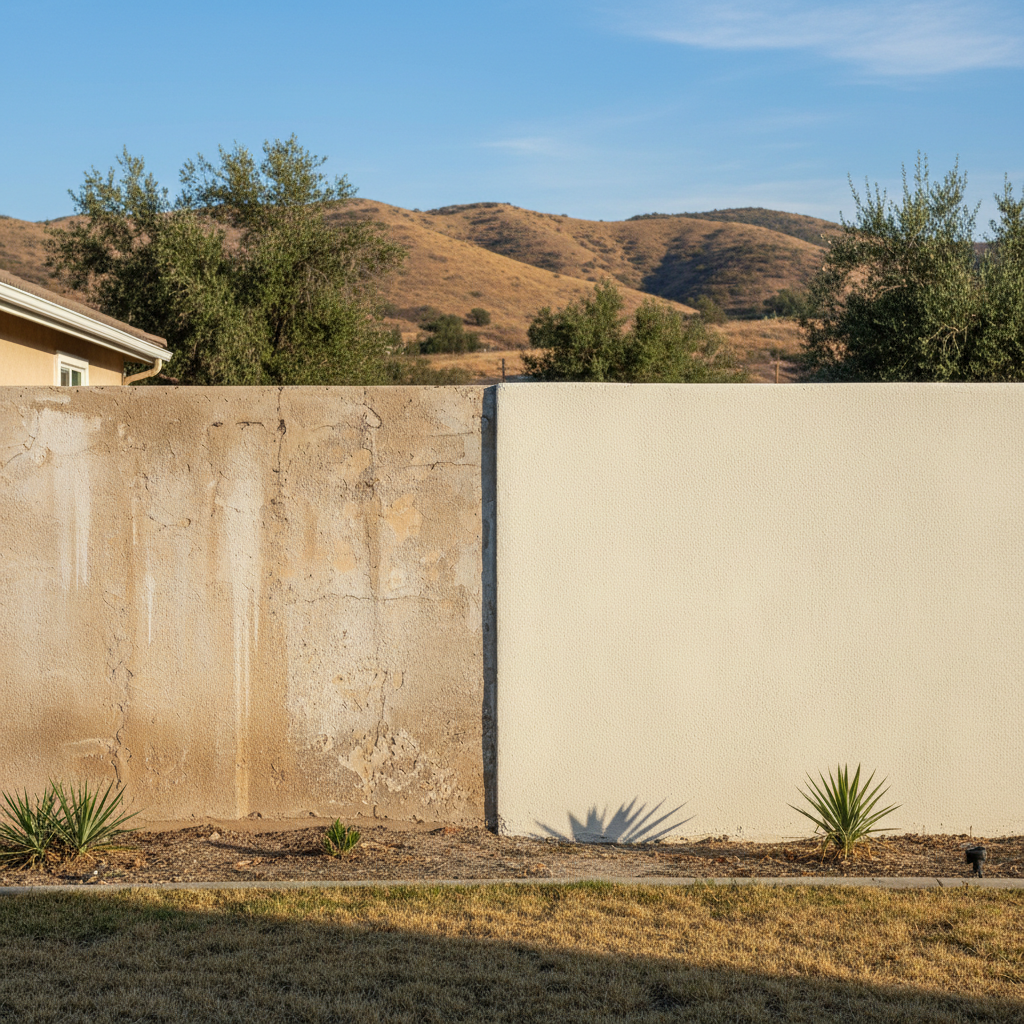
You've got stucco on your home, right? Most houses around here in Clovis do. And sooner or later, you're gonna wonder if it's really doing its job, or if there's trouble brewing behind the walls. When it comes to checking your stucco, you've really got two main paths: doing a quick visual check yourself, or bringing in a pro for a full moisture scan. Let's talk about what each one means for your home and your wallet.
The DIY Visual Inspection: Quick, Cheap, and Limited
Alright, so you want to take a look yourself. I get it. It's free, it's fast, and you can do it anytime. What are you looking for? You're mostly gonna be checking for obvious stuff: big cracks, crumbling stucco, staining, or areas that just look... well, off. You'll walk around your house, paying close attention to corners, around windows and doors, and anywhere water might collect or run down, like under eaves or near your foundation.
You might even tap on the stucco with your knuckles or a rubber mallet. If it sounds hollow, that could be a sign of delamination – where the stucco isn't properly bonded to the wall anymore. If it feels soft or spongy, that's a definite red flag for moisture. You're also looking for any signs of mold or mildew, especially near the ground or in shaded areas.
The big upside? It costs you nothing but your time. You'll get a general idea of your stucco's condition, and you might spot something that needs immediate attention, like a huge crack that's letting rain in. The downside? It's purely superficial. You're only seeing what's on the surface. You can't see what's happening *inside* the walls, and that's where the real damage often hides. A small crack on the outside could be letting in a lot of water that's rotting your sheathing from the inside out, and you wouldn't know it with just a visual check, would you?
The Professional Moisture Scan: Deeper Dive, Real Answers
Now, this is what I recommend for real assurance, especially if your home is more than a few years old or you've noticed any of those visual red flags. A professional moisture scan isn't just someone walking around your house. It involves specialized equipment, mainly a non-invasive moisture meter, and sometimes an invasive one if we find suspicious areas.
We'll use that meter to check moisture levels in various spots on your stucco. We're looking for elevated readings that indicate water intrusion. We'll pay extra attention to those vulnerable areas: around windows, doors, rooflines, penetrations like dryer vents or hose bibs, and the base of your walls. Here in Clovis, with our dry summers and occasional heavy winter rains, water can sit and cause damage surprisingly quickly if it gets behind the stucco. Especially in older homes in neighborhoods like Old Town Clovis, where building practices might have been a bit different, knowing what's going on is crucial.
If the non-invasive meter shows high moisture, we might recommend an invasive test. That means drilling a small, nearly invisible hole – usually about a quarter-inch – to get a direct reading of the moisture in the sheathing behind the stucco. We seal it right back up, of course. This gives us a definitive answer about whether you've got a hidden water problem.
The cost for a professional scan varies, but it's an investment. Think of it like a home inspection, but focused specifically on your stucco system. It's going to be more expensive than just walking around yourself, but it gives you a much clearer, more accurate picture of your stucco's health. You'll get a detailed report, often with photos, showing exactly where any issues are and what needs to be done.
Durability, Maintenance, and Appearance
Neither inspection method directly affects the durability or maintenance of your stucco. They're diagnostic tools. However, a professional scan can catch problems early, before they become major structural issues. Catching a small leak now and repairing it will absolutely extend your stucco's life and prevent bigger, more expensive repairs down the road. It's a proactive maintenance step, really.
Appearance-wise, a DIY visual check might help you spot aesthetic issues like cracks or stains. A professional scan, while focused on moisture, can also highlight areas where water damage is starting to affect the stucco's integrity. That will eventually show up as an appearance problem anyway.
My Recommendation for Clovis Homeowners
Look, if you're just doing a quick check after a storm or you're selling your house and need to disclose everything, a visual inspection is a good starting point. It's better than nothing. But if you're serious about protecting your investment, if your home is more than ten years old, or if you've seen *any* suspicious signs like staining, peeling paint on interior walls, or a musty smell, you absolutely need a professional moisture scan.
The peace of mind alone is worth it. Knowing for sure that your stucco is doing its job, or knowing exactly where the problems are so you can fix them, is invaluable. Here at Top Line Clovis Stucco, we've seen too many homes where a small, hidden leak turned into thousands of dollars in repairs because it wasn't caught early. Don't let that be your story. Get the right inspection done.