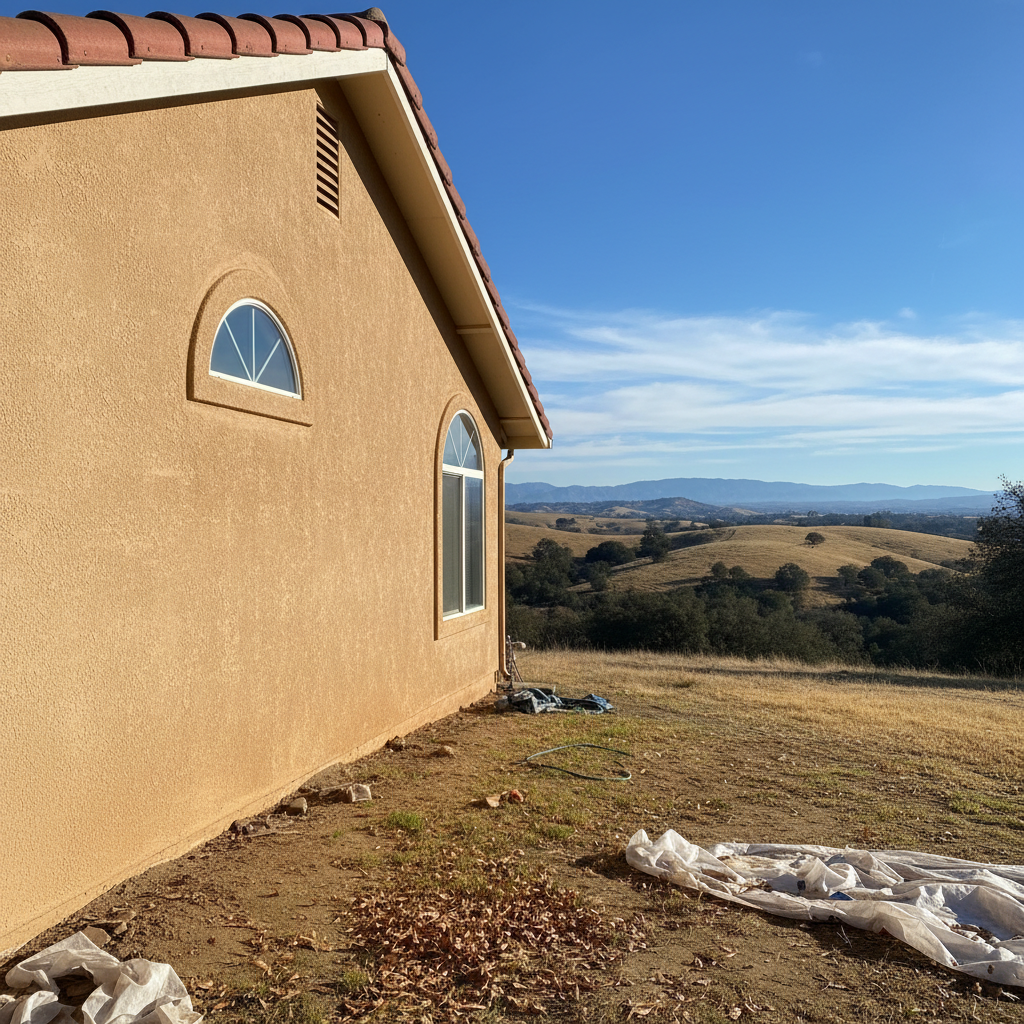
You've got stucco on your Clovis home, and you know it's tough stuff. But even the best stucco needs a little care, especially with our wild Central Valley weather. The big question I hear a lot is, "When's the best time to get this fixed?" It's not just about when you're free; it's really about when the weather will actually let the work last.
Why Clovis Weather Calls the Shots for Stucco Repair
Look, our climate here in Clovis is no joke. We swing from scorching summers with triple-digit heat to cool, damp winters. This isn't like the coast or the mountains, right? That extreme change really messes with how stucco acts and how well repairs will cure.
When I talk about stucco, I mean a material that needs specific conditions to set up properly. Too hot, and it dries out way too fast, often leading to cracks or a weak bond. Too cold or too wet, and it just won't cure right at all, which means it won't last. Honestly, you're basically tossing money away if you try to fight the weather.
The Best Time for Stucco Work: Spring and Fall
Hands down, the sweet spot for stucco repair and installation in Clovis is spring and fall. Think about it:
- Spring (March to May): Temperatures are usually mild then. We're talking 60s, 70s, maybe low 80s. The air isn't too dry, and we're generally past the heavy winter rains. This lets the stucco cure slowly and evenly, which gives you a much stronger, more durable finish. It's prime time for patching, re-dashing, or even a full stucco replacement.
- Fall (September to November): Once that brutal summer heat finally breaks, fall brings back those perfect mild temperatures. The ground isn't super saturated from winter, and the air has a nice humidity level without being overly wet. It's another fantastic window to get work done that'll truly stand up to our climate.
These seasons give the materials the best shot at bonding, curing, and hardening correctly. It's all about longevity, isn't it?
What About Summer and Winter?
You might be thinking, "But I want it done now!" I totally get that. But working against the weather usually means you're compromising the quality of the repair. Here's why we tend to avoid the extremes:
- Summer (June to August): It's just too hot, plain and simple. When it's 105 degrees out, stucco dries way too fast. This can cause what we call 'flash drying,' leading to shrinkage cracks, poor adhesion, and a finish that just isn't as strong. We can try to help it with shade cloths and misting, but it's always an uphill battle. Plus, it's brutal for my crew out there working in that heat.
- Winter (December to February): Rain is the big enemy here. Stucco needs to dry, not get washed away or stay perpetually damp. If it's too cold, consistently below 40 degrees, the chemical reaction that cures the cement slows down or stops altogether. You end up with weak stucco that won't last. We also deal with foggy mornings, especially in areas closer to the agricultural fields, which keeps everything damp for longer.
Sometimes, an emergency repair just can't wait, and we'll do what we can. But for planned projects, waiting for better weather is always the smartest move.
Protecting Your Stucco Investment Year-Round
Even after a repair, you've got to keep an eye on things. Here are a few quick tips:
- Keep an Eye Out: Walk around your house a few times a year. Look for new cracks, especially around windows and doors, or any discoloration that might mean moisture is getting in. Catching things early saves big headaches.
- Manage Water: Make sure your sprinklers aren't constantly hitting the stucco. Water is stucco's biggest enemy if it's not handled right. Check your gutters too; they should be directing water away from your foundation and walls.
- Trim Those Trees: Overhanging branches can rub against your stucco during windy days, causing abrasion. They also keep the stucco perpetually shaded and damp, which is never good.
- Regular Cleaning: A gentle wash with a hose and a soft brush can keep dirt and mildew from building up. Just don't use a high-pressure washer; it can damage the finish.
By understanding our local climate and scheduling your stucco work when conditions are right, you're not just getting a repair; you're getting a lasting solution. That's what we aim for at Top Line Clovis Stucco – quality work that stands up to our Clovis life.